Fashion Week always produces a lot of noise. There are clothes nobody will ever wear, sunglasses that appear to have been designed for welding, shoes that make walking look slightly optimistic, and eventually somebody announces that a haircut we were doing twenty years ago has been discovered.
This year, though, the hair was genuinely interesting.
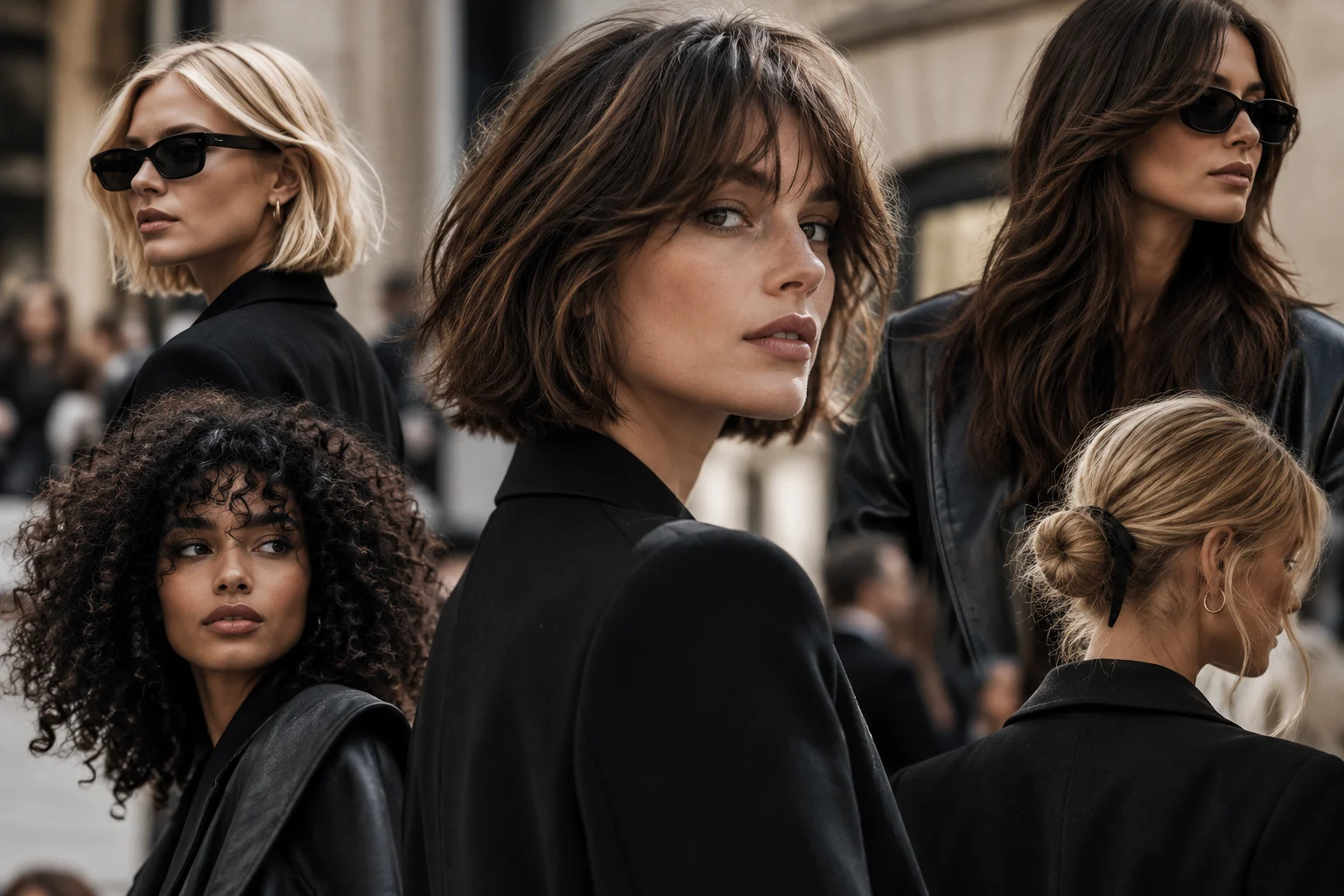
What caught my attention wasn’t one particular trend. It was the fact that hair looked as though it had actually been cut again. There were proper shapes, shorter lengths, bobs with edges, fringes that changed the face and natural texture that hadn’t been polished out of existence. It all looked a little more deliberate, and I like deliberate.
For quite a while we’ve been living through this idea that good hair should look as though nobody has touched it. Which is fine, except that quite often several people have touched it, nine products have been involved and somebody has spent forty minutes making very expensive hair look accidental.
There is something refreshing about a haircut that is quite happy to admit it is a haircut.
The bob was everywhere, naturally. The bob is one of those things that is constantly being described as “back”, despite never having gone anywhere. What changes is the attitude. This time they were shorter, cleaner and a little less polite. Some sat around the jaw, some had a softer curve and some were flicked out at the ends. They looked sharper without becoming severe.
A good bob is deceptive because it looks simple. It isn’t. There is nowhere to hide a bad line in a bob. If the weight is wrong, you see it. If the balance is wrong, you see it. If someone has simply drawn a horizontal line around the head and hoped for the best, unfortunately everyone else sees that too.
When it works, though, very little looks better.
The collarbone length was also everywhere, and it remains one of the most useful lengths you can have. You can wear it straight, put movement into it, tie it back, make it polished or leave it slightly undone. It gives you the feeling of shorter hair without requiring quite the same commitment.
I particularly liked the versions with the ends turned out. For years we carefully tucked everything under as though one piece of hair pointing in the wrong direction might bring society to an end. Now we are deliberately flicking it out.
Much better.
There were fringes everywhere too, although naturally they’ve all been given new names. Butterfly bangs, curtain bangs, rolled bangs. I’m sure somebody is currently working on the quiet luxury fringe.
The names don’t interest me very much. What interests me is what a fringe does to someone’s face. A softer fringe can open the cheekbones, draw attention to the eyes and completely alter the balance of a haircut without taking much length away at all. That can be far more effective than changing everything.
Of course, it can also become extremely annoying three weeks later if nobody has shown you what to do with it. This is the bit that tends not to make the mood board.
Curly fringes looked particularly good. I’ve never really understood the old idea that curly hair shouldn’t have a fringe. Curly hair is capable of doing wonderful things. You just have to understand that it moves, shrinks and occasionally has its own opinion.
In fact, one of the nicest things about the hair around London was that texture looked like texture. Afros looked like Afros. Curls looked like curls. Longer hair had movement rather than being ironed into one approved finish.
That feels modern to me.
Not because natural texture is some new trend — obviously it isn’t — but because there seems to be less obsession with correcting hair. Good hairdressing should work with what somebody has. You can refine it, shape it, improve the condition and move the weight, but you shouldn’t need to remove every trace of someone’s natural hair before the haircut starts making sense.
There was also more volume around, which I’m very pleased about. Proper blow-dries are quietly becoming glamorous again. Not the sort that looks as though the hair has been lacquered into position and could survive a minor collision, but hair with polish, movement and enough life left in it that you can still touch it.
Somewhere along the way, “done” became a slightly embarrassing word. I’ve never had a problem with hair looking finished.
Long hair was still very much there too, although the stronger versions had actual shape through them. This is another thing I feel rather strongly about. Long hair is a length. It isn’t automatically a haircut.
Sometimes it is simply hair that has successfully avoided scissors for several years.
There needs to be some balance around the face, some movement through the length and some thought about where the weight sits. You can absolutely have beautiful long hair, but “I don’t want to lose any length” cannot be the entire design brief forever.
What I really liked about London was that there wasn’t one haircut everybody suddenly needed. The whole thing felt broader than that. Short hair could be sharp. Long hair could be glamorous. Curls could stay curly. A fringe could be imperfect. A blow-dry could actually look blow-dried.
It felt more individual.
And that, ultimately, is the bit worth paying attention to.
You don’t need a “London Fashion Week haircut”. You certainly don’t need to walk into a salon and ask for a bixie, a clavi, a fob or whatever name somebody invents next week.
You need a haircut that works on you.
It needs to suit your face, work with your texture and fit into your actual life. The real test isn’t what it looks like when you leave the salon. Almost anything can look good for ten minutes with a hairdresser standing behind it.
The test is six weeks later.
It’s a Tuesday morning. You have nine minutes to get ready. Nobody is there with a round brush. You have absolutely no interest in recreating the salon finish.
If the hair still falls into place and still looks considered, then it was a good haircut.